Topic · The Technologies of the Awakened Mind
How to deal with anxiety, the Tibetan way
Anxiety isn't a flaw in you. It's attention that has learned to live in a future that hasn't arrived, a watchfulness that forgot how to stand down.
Why arguing with anxiety rarely works
The instinct is to reason with it: lay out the evidence, prove the fear unfounded, and expect it to leave. It almost never does. Anxiety doesn't live in the part of the mind that weighs evidence: it lives lower, in the system that scans for threat and rehearses escape. Debating it is like arguing with a smoke alarm. The Tibetan contemplative tradition noticed this long before the vocabulary of the nervous system existed, and built its response around a different move: not winning the argument, but changing your relationship to the alarm.
What the tradition offers instead
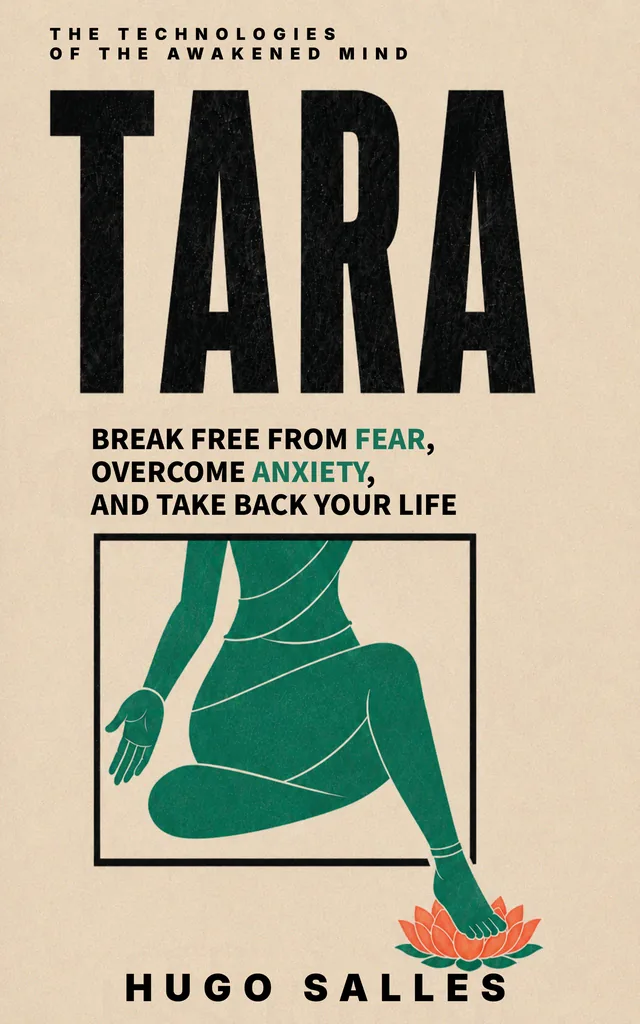
Instead of suppression, it trains a specific sequence: see the mind reacting, decline the automatic response, and re-anchor attention in what is actually happening now rather than what might happen later. The figure of Tara carries this whole method in a single posture: seated in stillness, yet with one foot already stepping down into the world. Stillness that acts. That is the shape of the practice: not the elimination of fear, but the ability to move while it's still present.
A practice for the acute moment
Five to ten minutes, usable in a spike of tension or as a daily anchor.
- Name the alarm. Say, silently, "this is anticipation, not the event." You're not denying the fear, you're locating it.
- Drop to the body. Move attention out of the story and into three slow breaths, letting the exhale run longer than the inhale.
- Find the one next action. Not the whole problem: the single next physical step. Send the message. Stand up. Open the document.
- Step, with the fear present. Do that one action without waiting for calm to arrive first. Calm, if it comes, comes after.
Go deeper
Tara
The full method for moving through fear: practices for the crisis, the frozen decision, and the loop of anticipation.